More tickets, better odds – but how realistic is it really?


More tickets, better odds – but how realistic is it really?
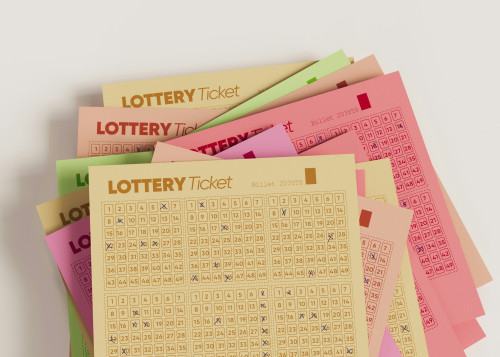
The dream of a life-changing win is alive and well in Ireland. Every week, thousands of people buy Lotto tickets, EuroMillions lines, and scratch cards, hoping that their numbers will finally come up. The logic seems simple enough: the more tickets you buy, the better your chances of winning. But how much does it really help – and is it realistic to think you can “play your way” closer to the jackpot?
The cold logic of probability
Lotteries are, by design, games with extremely low odds of winning. In the Irish Lotto, for example, the chance of hitting the jackpot is roughly 1 in 10.7 million. In EuroMillions, it’s closer to 1 in 139 million. So even if you buy ten lines instead of one, your odds only improve from 1 in 10.7 million to 10 in 10.7 million – or 1 in about a million. That’s still vanishingly small.
Mathematically, it’s true that more tickets increase your chance. But the difference is so tiny that it’s practically meaningless. It’s a bit like buying two tickets for a flight that almost never crashes – you’ve technically doubled your risk, but it’s still almost zero.
The psychological trap
Many players overestimate how much extra tickets matter. This comes down to a psychological phenomenon known as the illusion of control – the belief that we can influence outcomes that are actually random. Choosing your own numbers or buying multiple lines feels like taking action, but in a lottery, every combination is equally likely, no matter how “lucky” it seems.
Another factor is availability bias: we constantly hear about the winners, but rarely about the millions who don’t win. That makes jackpots seem more common than they really are. When someone in Cork or Galway wins big, it’s headline news – but the countless losing tickets never make the papers.
Læs også:


When more tickets make sense
There are situations where buying more tickets can make a noticeable difference – but only in small-scale draws. If you’re taking part in a local raffle with 500 tickets and 50 prizes, one ticket gives you a 10% chance of winning something, while five tickets raise that to around 41%. In that kind of setting, the strategy can actually pay off.
But in national or international lotteries with millions of entries, the effect is so small that it’s effectively meaningless. In those cases, it’s better to see the game as entertainment rather than a financial plan.
The economics behind the dream
Lotteries are designed to generate revenue – not for players, but for organisers and public causes. In Ireland, a portion of every ticket sold goes to good causes such as sports, arts, and community projects. That’s a positive outcome, but it also means that, on average, players lose money over time.
If you spend €5 a week on lottery tickets, that’s €260 a year – or €2,600 over a decade. For most people, that’s the price of a bit of excitement and daydreaming, not a realistic path to wealth.
Play with awareness
Playing the lottery can be fun, as long as you understand the odds. Treat it as a form of entertainment, not an investment. Set a budget you can afford to lose, and resist the urge to chase losses with more tickets.
If you want to improve your “chances of winning” in life, investing in education, savings, or even a pension fund offers far better odds of a positive return than any lottery ever could.
The dream lives on – but reality wins
“More tickets, better odds” is technically true, but in practice, it rarely changes anything. Lotteries are about luck, not strategy – and luck can’t be bought or planned. So perhaps the wisest approach is this: play for fun, dream responsibly, and remember that the surest win is the enjoyment of the hope itself.
Læs også: